World of Hurt: Abolitionist Reflections on the Root Causes of Harm

What causes people to harm others? Reactionaries label certain individuals—or, worse, entire demographics—inherently harmful to justify their own efforts to inflict harm via vigilante attacks, policing, and the court system. Others suggest that experiencing harm can lead some to harm others, as suggested by the common catchphrase “Hurt people hurt people.” Here, we examine this popular notion and propose a more useful framework for understanding the root causes of harm.
Today, a ruling class headed by billionaires and aspiring autocrats is making the celebration of violence central to their narratives and policies, openly campaigning against empathy itself. In this context, the question of what causes harm—and how to interrupt it without reinforcing cycles of hurt and oppression—has become increasingly urgent.
World of Hurt
Abolitionists who envision a world without police or prisons often face questions about how to address serious forms of interpersonal harm. Mutual aid and resource redistribution may reduce behaviors that arise as a consequence of lack of access to basic needs. But how can we understand those who seem to hurt others out of cruelty or disregard? If we don’t accept the idea that some people are monsters who must be locked up to keep the rest of us safe, how can we make sense of their actions?
Defenders of the criminal legal system frequently cite rape and abuse to justify prisons and imprisonment. In response, abolitionists have devoted considerable energy to developing alternative approaches to addressing sexual violence. Groups such as Generation Five have proposed principles for responding to child sexual abuse through transformative justice frameworks. By focusing on one of the most stigmatized forms of harm, they aim to cut to the root of carceral thinking in order to reimagine safety and justice.
But creative responses beyond the state are not enough. To end sexual violence, we also need to understand its root causes.
Feminist activists coined the term “rape culture” to describe how social norms and institutions enable sexual harm. In addition to these structural effects of gender and power, others argue that past experiences of harm shape the behavior of individuals who go on to harm others. One of the most common ways to articulate this principle appears in the phrase “Hurt people hurt people.”
Let’s take a closer look to see where this popular saying came from, how it is used, and its implications for an abolitionist understanding of harm.
The Trajectory of a Slogan
From self-help books and therapist blogs to the writings of abolitionist activists, “hurt people hurt people” has become an influential account of the psychology of violence. It suggests that some people harm others not because they are pathological monsters, but because they too are victims whose unresolved trauma shapes their hurtful actions.
The precise origins of the phrase are opaque, but it has been in circulation at least since the 1950s. It seems to have begun trending in the 1990s in therapeutic and pop psychology circles. A popular 1993 Christian self-help book titled Hurt People Hurt People promised to support readers in healing from painful past relationships “with empathy and biblical insight.” In recent years, this phrase has been repeated by everyone from megachurch pastor Rick Warren to Hollywood actor Andrew Garfield to the stripper con artist character Destiny in the movie Hustlers to the metal band Mudvayne. It appears most widely in discourse about therapy, self-help, trauma, and religion.
On the surface, “hurt people hurt people” might seem an odd slogan for radical critics of the prison industrial complex. As a maxim of folk wisdom that spans mainstream, religious, feminist, and radical circles, we should consider carefully whether it aligns with our values.
In some ways, it makes sense that abolitionists would find this formulation promising. It humanizes people who cause harm, whereas dehumanizing them paves the way for carceral responses. It attributes the roots of harmful behavior not to inherent depravity, but to contingent circumstances that can be changed. It resonates with the lived experiences of some people who are struggling to heal and to be accountable for hurting others. It seems to offer a hopeful pathway towards a world without sexual violence by intervening in support of those who have been harmed in order to interrupt the cycle.
This compassionate approach to rethinking the causes of violence has inspired abolitionist activists such as Mariame Kaba. In her book We Do This ’Til We Free Us: Abolitionist Organizing and Transforming Justice, she discusses transformative justice alternatives to criminal punishment. Following an instance of harm, she writes, we should first center the immediate needs of a survivor. Next, however, she argues that
We would also focus on the person responsible for the harm—but without disregarding their humanity. This means we have to acknowledge the reality that often it is hurt people who hurt other people. Understanding that harm originates from situations dominated by stress, scarcity, and oppression, one way to prevent violence is to make sure that people have support to get the things they need.
Kaba considers both power structures and individual psychology in responding to violence. Her book proposes a pathway toward the prevention of harm through community support and trauma resolution rather than punishment.
Other abolitionist writers and activists have taken up the phrase. In a chapter on “Healing as Abolitionist Practice,” the authors of Thinking Like an Abolitionist to End Sexual Violence in Higher Education recount the story of a person who was sexually assaulted by a friend who was himself a survivor of child sexual abuse.
“In reflecting on her trauma,” the authors explain, the young woman interpreted the experience through the lens of “‘hurt people hurt people’—a concept that rings true for her own experiences as someone who has harmed as well.” Having both experienced and caused harm in intimate relationships herself, she decided to turn away from carceral responses. Instead, she pursued a pathway to accountability with the person who had harmed her, intending not to punish him but to reduce the likelihood that he would harm others in the future. The authors cited this framework in their discussions about abolition and sexual violence on college campuses.
Yet despite these positive examples, “hurt people hurt people” poses problems that should prompt abolitionists to reconsider using it. The slogan risks reinforcing victim-blaming and misunderstanding the root causes of harm. Let’s dig deeper and look for an alternative framework to recognize pathways to change while more accurately analyzing the origins of sexual violence.
The Problem with “Hurt People Hurt People”
What’s wrong with the idea that “hurt people hurt people”?
Consider: in general, which people experience the most harm in our society? Oppressed people. Who is primarily responsible for that harm? Their oppressors.
Of course, we know that oppressed people hurt others in many ways. But Black people are not responsible for anti-Black racism; white people, and sometimes other non-Black people, are. Trans people are not responsible for transphobia; cis people are. Posing “hurt people hurt people” as a totalizing explanation risks misrepresenting the root causes of harm and misattributing responsibility for it.
Yes, oppressors themselves have often been hurt in various ways, and are sometimes oppressed along other axes. For instance, white women often perpetuate racial oppression while experiencing gender oppression. There are countless such examples.
But is that what leads them to hurt others? If so, this framework seems to imply that as we go upwards in the pyramid of social power, to levels where people are less and less oppressed, we should find people who hurt others less and less.
In fact, the opposite is true. To name a single example, Donald Trump’s widely exercised capacity to hurt others exceeds that of almost anyone in human history. However much he may have been hurt by others himself, the harm he causes stems directly from the sense of entitlement that his wealth, whiteness, maleness, US citizenship, and other aspects of privilege have bestowed upon him.
Perhaps, then, we need a more expansive sense of what it means to be “hurt.” From a certain perspective, white people are harmed by white supremacy, which leaves them disconnected from ancestral cultures and land, with a truncated humanity and an inability to relate across lines of difference. Of course, they are hurt by white supremacy differently and far less severely than non-white people are. Likewise, men suffer under patriarchy—experiencing rigidity, emotional disconnection, shorter lifespans, and greater likelihood of dying in battle—though certainly far less than women and trans men do. Can the “hurts” that privileged people experience account for their harmful actions?
It’s both accurate and politically strategic to emphasize the stake that all people have in dismantling systems of oppression, regardless of whether they are privileged or oppressed. If patriarchy is genuinely good for men, if white supremacy is in the interest of white people, then the only basis for men or white people to act against racism or sexism—to act against their interests—would be altruism or false consciousness. Self-sacrificing altruism alone will not suffice to move large numbers of men and white people to resist patriarchy and white supremacy, but the participation of millions of such people will almost certainly be necessary if we are to dismantle those systems.
The well-known words of Lilla Watson and other Aboriginal Australian activists bear repeating here: “If you have come here to help me, you are wasting your time. But if you have come because your liberation is bound up with mine, then let us work together.” Describing the harms that systems of oppression do to those they privilege—as well as to those they oppress, if unequally—can form one strategy for promoting solidarity. But it may prove more valuable to emphasize, as the above quote does, a positive vision of mutually intertwined liberation.
Still, recognizing that both the privileged and the oppressed are “hurt” by systems of oppression doesn’t necessarily get us any closer to understanding the root causes of harm. It’s inaccurate and offensive to group these vastly different harms under a single generic category of “hurt.” And it makes little sense to attribute responsibility for the oppressive behaviors of members of dominant social groups to the “hurt” they supposedly experience as a consequence of occupying those dominant positions. On the contrary, it seems far more plausible that it is precisely the ways in which such people are not hurt—their privilege and entitlement—that facilitate their harmful behavior towards others.
These are good reasons to be suspicious of the “hurt people hurt people” framework. Nonetheless, it resonates deeply with many individuals, particularly in the sphere of intimate relationships. Could it still offer a transformative account of the causes of sexual violence?

Beneath the Statistics: How the Criminal Legal System Creates More Harm
Abolitionists reject the idea that some people are inherently, irredeemably bad and therefore deserve punishment and confinement. Instead, we seek to understand the root causes of harmful behavior. If people hurt others because they have themselves been hurt, then harmful behavior emerges from particular circumstances, circumstances that can be changed.
Many “crimes,” such as theft or trespassing, can easily be traced to unmet material needs. To reduce or eliminate these, we need to change our social system to ensure that everyone has access to food, housing, and other basic necessities. But more harmful behaviors such as assault or rape, which can’t be easily explained as people trying to meet core material needs, pose a deeper challenge to abolitionist logics.
Proposing that “hurt people hurt people” offers the hope that by interrupting cycles of harm, we can reduce the likelihood of hurt people in turn hurting others. By promoting healing, resolving trauma, and intervening to prevent harm, we can create a virtuous cycle in which hurt no longer creates more hurt. As fewer people experience sexual violence—the logic goes—fewer people hurt by that violence will hurt others in turn. As the prevalence of rape and abuse diminishes, the perceived need for carceral responses to it will diminish along with it.
Yet once again, the “hurt people hurt people” framing proves problematic when it comes to explaining sexual harm.
At first glance, research into sexual offenders appears to support a connection between experiencing sexual harm and causing it. Sexual violence advocates cite a range of studies claiming that “perpetrators of child sexual abuse are also often victims of child sexual abuse.” As one 2014 study concluded, “Sex offenders had more than three times the odds of child sexual abuse, nearly twice the odds of physical abuse, thirteen times the odds of verbal abuse, and more than four times the odds of emotional neglect” relative to men in the general population.
On the surface, this appears to confirm that “hurt people hurt people” when it comes to sexual harm. However, a closer look through an abolitionist lens undermines this conclusion.
According to the criminal legal system’s own statistics, “Rape is the most under-reported crime,” with at least 63% of sexual assaults not reported to police. That’s almost certainly a low figure, given how many survivors don’t define their non-consensual experiences as rape or may not report them on Department of Justice surveys. Additionally, in the minority of experiences of sexual assault that are reported to police, almost none result in convictions and fewer still in imprisonment. According to FBI statistics, “For every 1000 sexual assaults, 50 reports lead to arrests, 28 cases lead to a felony conviction, and only 25 perpetrators are sentenced to incarceration.”
This means that the vast majority of people who commit sexual harm never end up in prison, so never end up in the statistics cited to claim that “hurt people hurt people.”
Who actually gets sent to prison for sexual offenses? It’s certainly not a representative sample of those who sexually harm others. It’s mostly people who are already vulnerable to the criminal legal system, often due to poverty, racism, and other forms of marginalization.
So when these statistics imply that “perpetrators” (in this case, the tiny percentage of people convicted and imprisoned, not all people who commit such harms) are themselves disproportionately survivors of sexual abuse, what does that actually tell us?
It tells us that the people who are most likely to be caught up in the criminal legal system are the people who are most likely to be abused. Statistically, hurt people are more likely to be hurt by the criminal legal system themselves than to hurt others. Consider the enormous proportion of incarcerated women who are survivors of partner violence, whose “crime” was often simply survival.
The reality behind the statistics is that carceral responses are more likely to compound the harms that survivors experience than to prevent future harm or secure “justice.”

The Impact on Survivors
Beyond debates over statistics, there are additional problems with the framework “hurt people hurt people.” Let’s start with the impact it has on survivors themselves.
Consider this account from a rape crisis counselor:
I began to reconsider this idea that “hurt people hurt people” when I worked as a facilitator for support groups of adult male survivors of child sexual abuse. One of the most painful feelings I heard these men express was the fear that they themselves might be doomed to hurt others because of what they’d experienced. This sentiment was frequently shared and widely resonant among the men in my groups. Many of them seemed to have absorbed the narrative that those who commit sexual abuse usually had been subjected to it themselves. They had no desire to hurt anyone; on the contrary, they had an absolute horror of making anyone go through what they had gone through. But they were terrified that somehow, because of what they’d experienced, they were at risk of causing harm to others. Some avoided intimate relationships or raising children because of these fears.
Despite the lingering power of this myth, the research that has been conducted indicates that it isn’t true. The National Sexual Violence Resource Center cautions, “IT IS RARE for victims of child sexual abuse to become perpetrators as adults.” They cite a 2015 study that concluded, “The widespread belief that sexually abused children are uniquely at risk to become sex offenders was not supported by prospective empirical evidence.”
Yet despite the lack of evidence, this myth remains deeply entrenched, in part due to the influence of the “hurt people hurt people” framework, which is often repeated by well-meaning abolitionists.
This myth inflicts a cruel additional punishment on survivors already burdened by the trauma they have experienced. It builds on the shame that survivors often feel, even when they know that the violence they endured wasn’t their fault. They often feel damaged or broken, and the myth that they are likely to go on to hurt others seems to confirm this. For this reason alone, we should consider the costs of reinforcing this paradigm.
This fear is also distinctly gendered. Female survivors are far less likely than male survivors to internalize the idea that experiencing rape or sexual abuse will lead them to harm others sexually. This is partly due to the social reality that men commit the greatest proportion of sexual violence. But it’s further reinforced by the relative invisibility of male survivors—and particularly for queer men, it’s compounded by the homophobic messaging that associates same-sex love with pedophilia.
Repeating the story that hurt people hurt people turns away from the feminist analysis of rape as an expression of power. In its place, we’re left with a depoliticized take on trauma that ignores how norms of gender and sexuality shape victimization and reinforce stigma.

Harm and Disrupted Empathy
If the framework “hurt people hurt people” does not offer an adequate explanation of the causes of oppression and abuse, what could be a useful alternative?
Here’s a different way that abolitionists might frame the roots of harm:
People with disrupted empathy hurt people.
Empathy here means our ability to perceive, understand, and respond to the feelings of others. It involves entering into another person’s reality, sensing their perspective and their emotions, and reshaping our actions based on that awareness. Empathy is the basis for human connection, a key foundation for relationships and communication. When it is disrupted, it undermines that connection in ways that can lead to harm.
This formulation assumes that all people have an inherent capacity for empathy. It doesn’t describe people as “lacking” empathy; that could imply that some people never had it, can’t attain it, or can’t recover it. Instead, the concept of “disrupted” empathy suggests a propensity that can be regained.
Many different factors shape a person’s capacity for empathy, including past experiences, forms of neurodivergence, cultural norms, and more. This framework emphasizes the social dimensions of empathy, understanding empathy as a mode of relating that is modeled, given and received, learned and practiced over time. In this framing, we can conceive of empathy the way some linguists conceive of language: as an instinct inherent in our species but requiring social connection and learning to unlock and develop.
This conception draws on the abolitionist insight that both the structural and individual changes are necessary if we are to do away with harm. As we work with particular people to help restore their empathetic connection to others, we can also create social structures that reinforce empathy.
Empathy and Sexual Harm
Could this framework provide a more accurate assessment of the impact of sexual violence and similar forms of harm?
In some cases, experiencing sexual harm can disrupt a person’s capacity for empathy. This is most likely to result when the harm occurs in conjunction with other forms of physical and emotional abuse, especially if those are severe forms or take place at an early age. When a person starts out without safe and supportive relationships in which empathy can be modeled and received, that can inhibit the formation of such relationships later in life.
One of the most important components of healing from the trauma of such experiences involves receiving empathy—being believed and taken seriously, having one’s pain validated and grieved. This kind of recognition can form part of a healing journey that can restore disrupted empathy, significantly reducing the possibility that the healing person will harm others.
Often, experiencing sexual harm can intensify empathy. Many survivors become deeply attuned to the dynamics of consent and more conscientious about their interactions with others. Many become supporters and advocates themselves, transforming their experiences of hurt from liabilities into strengths as they offer empathy to other survivors.
This intensified empathy can feel like a double-edged sword. Sometimes it takes the form of heightened sensitivity to references to sexual assault, which can be dysregulating. It can also show up as becoming a particularly caring friend, a skilled counselor, a determined advocate, or a powerful organizer against violence.
The intensified empathy that can emerge out of experiences of trauma can become a super power, if sometimes an overwhelming one to possess. In touch with their emotions and acutely aware of the pain they experienced, many survivors are particularly attuned to others’ feelings and aware of the ways that they impact others. These qualities make them less likely to cause harm than the average person.
Survivors of sexual violence who fear that their experience may dispose them towards harming others should take heart. It is not the experience of being hurt but a condition of disrupted empathy that leads people to hurt others.
No one can undo what we’ve experienced in the past, but we can take proactive steps to restore empathy. We can actively work to address our own trauma, rebuild a sense of safety and connection, share our experiences with others, and keep listening and learning. In doing so, we can heal ourselves and ensure that the cycle of harm ends with us.
Disrupted Empathy, Oppression, and Entitlement
Experiencing hurt is not the only thing that can disrupt empathy. There are much more common root causes.
Let’s add another layer to our abolitionist analysis of harm:
Oppressive systems that engender entitlement can also disrupt empathy.
Consider patriarchy, a system of oppression that is central to sexual violence. Patriarchy is a system of institutions and social relations that concentrate power for men at the expense of women and others. This system enables men to feel entitled to the labor, bodies, care, and obedience of women and others. Masculinity is defined in part by this sense of entitlement, while empathy is coded as feminine.
The masculine ideal of repressing emotions and remaining impervious to pain cuts off men’s empathy for themselves. This normalizes seeing others as weak and inferior if they feel pain themselves, or if they empathize with the pain of others. Gender norms train men, and all those who aspire to masculine power, into disrupted empathy.
Rape culture feeds on this disrupted empathy. Sexual violence could not exist without disregard for others’ pain and entitlement to others’ bodies. Oppressive gendered power structures bear far more responsibility than “hurt people hurting people” for the disrupted empathy that enables people to cause harm.
A great deal of evidence suggests that sexual violence flourishes in settings or social groups where collective norms support or excuse it. In other words, contexts in which sexual violence often occurs are not simply places that happen to include lots of pathological individuals. All people have a capacity to treat others with respect and consideration or with disregard and contempt. How people choose to treat others depends largely on the norms that predominate in those settings and groups.
It’s not surprising that the settings in which high rates of sexual violence have been documented—such as some fraternity houses, military units, and prisons—are male-dominated environments in which rituals that disrupt empathy are central to social norms. Hazing ceremonies, abusive officers or guards, and dehumanizing language and treatment all model relations devoid of empathy. In such environments, expressing feelings, showing care, and relating to others’ pain can indicate weakness, making someone a target for ridicule, exclusion, and violence. In these mostly single-sex environments where misogynist attitudes predominate, it’s not surprising that participants often direct sexual violence at women, trans and queer people, and others perceived as effeminate.
Another social structure that disrupts empathy is whiteness. Hundreds of years of racist violence and domination could not have taken place without white supremacy, an ideology that numbs its adherents to the pain of those whose humanity it denies. As Mab Segrest argues in Memoir of a Race Traitor, a key component of white culture and identity established in the era of slavery and persisting to this day is anesthesia, a deliberate repression of sensation and empathy towards racialized people. White supremacy is not just a belief about the superiority of one group defined as a race over another. It’s a claim about who is entitled to land, labor, resources, and bodies.
Sexual violence was central the antebellum economy, as enslavers utilized rape to reproduce the enslaved workforce and increase white intergenerational wealth. White men’s sense of entitlement to the bodies of people of color, particularly women and trans people, persists today in countless forms, from high rates of sexual violence and differential treatment of survivors of color in the criminal legal system to the racist tropes that saturate mainstream pornography.
So long as whiteness persists as a system for distributing power, its disruption of empathy will reinforce cycles of racial and gendered violence.
Yet there is no simple equation between identity and disrupted empathy. It is true that privilege—not having to think about the oppression that others experience—and a lack of shared experience frequently disrupt the empathy of those socialized as men and positioned as white. But there is nothing inherent in any demographic that produces disrupted empathy. Those from dominant groups can be deeply empathetic, and those from oppressed groups experience can experience disrupted empathy as well.
All people are capable of harming others, though patterns of social power distribute those harms unevenly. Developing an analysis of the origins of social harm in disrupted empathy can enable abolitionists to craft effective strategies for responding to it while dismantling the carceral structures that exacerbate its root causes.
While patriarchy and white supremacy form two of the oppressive systems most central to the entitlement and disrupted empathy that drive sexual violence, they are by no means the only ones. The “corrective” rape of lesbian women and the hate-fueled sexual assaults on gay men and trans people reflect the ongoing power of homophobia and transphobia. The persistence of inaccessible spaces throughout much of the American landscape reflects the entitlement many non-disabled people feel to convenience, low costs, or familiarity over disabled people’s ability to participate in public life. The horrific assaults that ICE and the Border Patrol are perpetrating against immigrant communities feed on narratives framing immigrants as dangerous outsiders undeserving of empathy.
These oppressive structures—and many others like them—interrupt the basic intuitive feelings of connection and concern we feel towards other people, rendering it possible to concentrate power through artificial social divisions. These structures, far more than individual experiences of hurt, are the root cause of persisting sexual violence and other patterns of harm in our society.
Opposing Empathy to Reinforce Hierarchy
Empathy disrupts oppression; disrupted empathy reinforces oppression. In view of this, it is not surprising that many of the wealthiest and most privileged people in our society today are trying to discredit empathy itself. They want to convince us that selfishness and disregard for others’ suffering—the qualities that have enabled them to amass wealth and power at our expense—are natural and healthy, while connection and solidarity are pernicious.
Elon Musk is leading this charge. In an appearance on Joe Rogan’s podcast, the world’s first trillionaire claimed, “The fundamental weakness of Western civilization is empathy.” His rant combined racist anxiety about immigration and changing demographics in “the West” with gendered fears over women’s autonomy and trans people’s existence. As a successful capitalist, it is not surprising that he is promoting competition and economic inequality as desirable for their own sake.
But Elon Musk is not alone. Figures from the Christian Right speak of “the sin of empathy,” reframing what is usually seen as a virtue as harmful and citing tolerance for trans people as an example of its “destructive” consequences. Religious critics accuse progressives of deploying “toxic empathy” to undermine Biblical morality, citing those who defend reproductive autonomy because they care about pregnant women at least as much as their unborn fetuses. Conservative academics warn that “suicidal empathy” subverts logical thought and optimal decision-making, allegedly undermining “Western” society by causing people to accept poor/non-white/Muslim immigration.
Why do MAGA and the far right feel so threatened by empathy today?
Perhaps because their entire program of hierarchy and domination would be undermined if people were fully able to feel and act on the misery that it inflicts on the vast majority of the global population. Perhaps because nationalism, racism, patriarchy, and transphobia could not survive if people from dominant groups considered perspectives and feelings beyond their own. Perhaps because modes of relating based in empathy—such as solidarity and mutual aid—point to the possibility of a way of life beyond capitalism and the state.
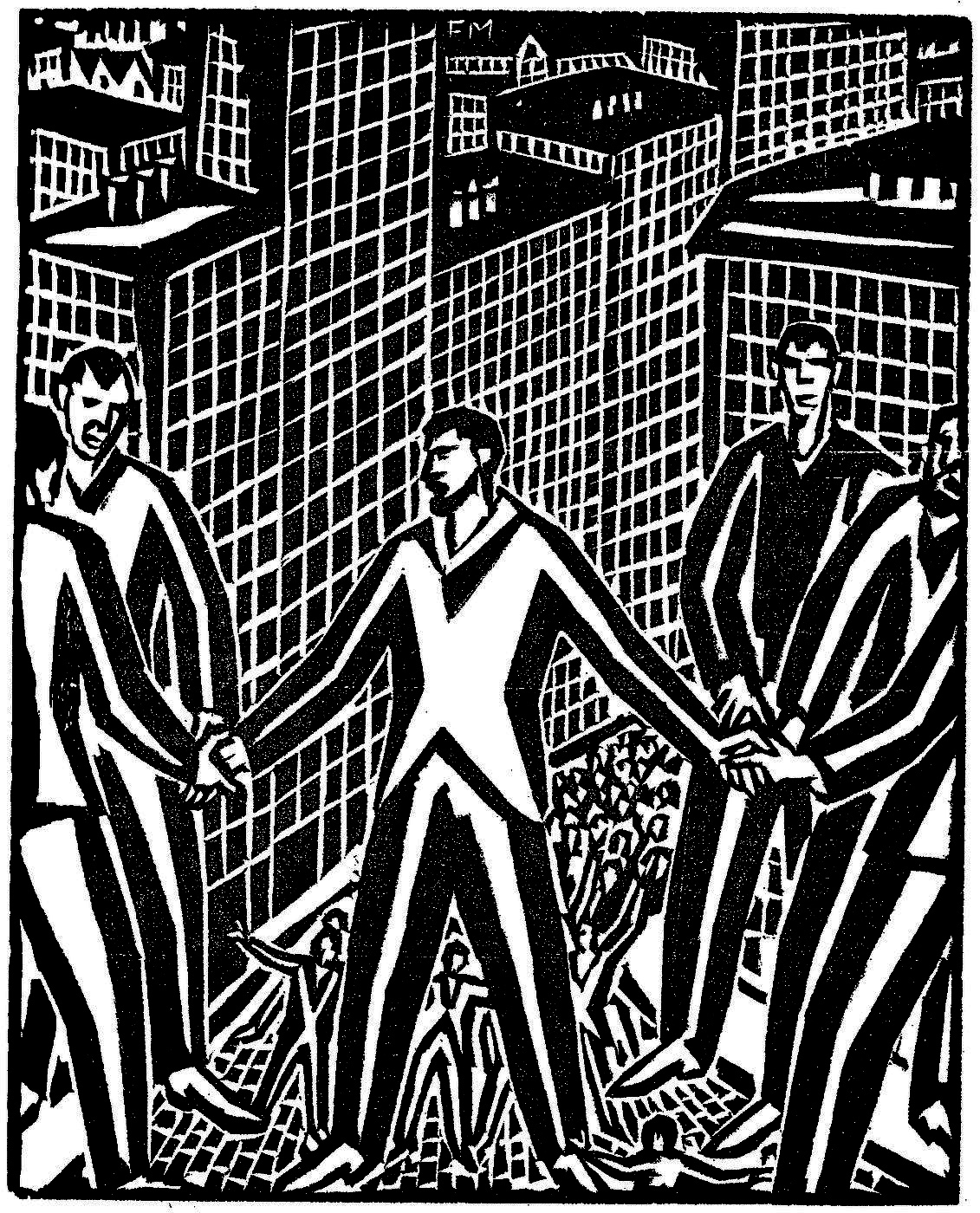
Empathy alone won’t suffice to tear down the systems of oppression that confine us, but it’s an essential first step. It connects our responses to interpersonal harm on an individual level to our organizing to transform society on a collective level. It is the keystone of an abolitionist future. That is why it is intolerable to those invested in propping up the ruling order today.
Conclusion: Empathy and Abolition
Abolition requires restoring disrupted empathy. This must go in both directions: it means restoring the empathy that those who have caused harm feel towards those they harmed, while also insisting on empathy for people who have caused harm as essential to the process of transformation.
By contrast, the core principle of the criminal legal system is the negation of empathy. No one could administer punishments ranging from fines to caging to execution without cutting themselves off from empathy for those they punish. The state’s entire concept of “justice” revolves around perpetually inflicting harm and suppressing empathy. Is it any wonder that our society continues to suffer from forms of behavior stemming from disrupted empathy when one of the chief forces actively disrupting our empathy is the “justice” system itself?
This doesn’t mean that if we simply treated people better and listened to their feelings, no one would hurt anyone. Disrupted empathy isn’t the only cause of harmful behavior, but it is an enabling condition for it. As such, it is a root cause that abolitionists can work to address. And since the primary “solutions” that our criminal legal system offers are explicitly premised on rejecting empathy, this framework offers us a clear basis for rejecting carceral responses.
Let’s let go of the narrative that “hurt people hurt people.” At best, it serves to humanize people who hurt others and to call for responses that interrupt cycles of harm. But it also reinforces hurtful myths, redirects attention from structural to individual factors, and misdiagnoses the root causes of harm.
Instead, let’s tell a broader story about the foundations of social harm that suggests concrete steps we can take to redress it. Focusing on disrupted empathy rather than past experiences of hurt offers a more holistic and accurate account of sexual violence in particular and interpersonal harm in general.
Abolition means more than simply doing away with prisons and police. It requires us to reconnect to our basic capacity to see and feel one another’s humanity. To restore our collective empathy as a culture, we must dismantle the structures of social oppression that have disrupted it.
Those who have been hurt by rape culture, patriarchy, white supremacy, and other harmful systems have a vital role to play in this ongoing struggle. Not because they, as hurt people, are especially likely to hurt others—they aren’t—but because the insights that their experiences offer can equip them to step out of the endless cycles of harm perpetuated by carceral systems and craft a renewed vision of liberation anchored in empathy for all.